
2026 Ford Ranger: Rugged Refinement
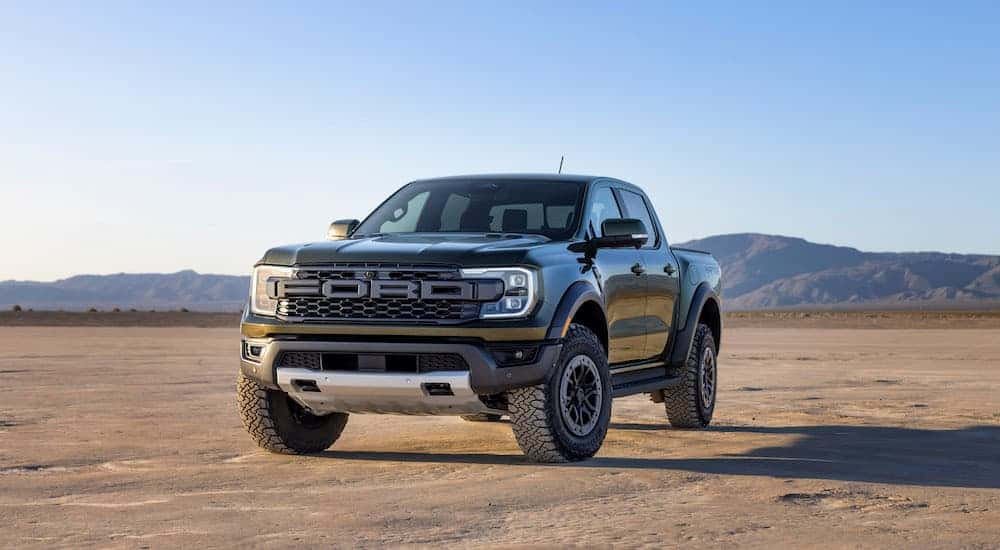
The 2026 Ford Ranger occupies one of the most useful positions in today’s pickup market.
It is smaller and easier to maneuver than a full-size F-150 but still offers a real pickup bed, body-on-frame construction, available four-wheel drive, up to 7,500 pounds of towing, multiple EcoBoost® engines, and serious off-road capability—including the 405-horsepower Ranger Raptor®.
For drivers throughout Western Arizona, that combination can make a lot of sense.
A Ranger can handle commuting around Kingman or Bullhead City during the week, tow recreational equipment toward Lake Havasu or the Colorado River, carry camping or work gear in the bed, and tackle appropriate dirt roads or trails when properly equipped.
Within Anderson Auto Group, Ford shoppers have access to both Anderson Ford Kingman and Anderson Ford Bullhead City, while the group’s Toyota and Chevrolet dealerships create opportunities to compare Ranger with other midsize pickups before deciding which truck actually fits the job.
First: The 2026 Ranger Is Not an All-New Truck
The current U.S.-market Ranger generation arrived for the 2024 model year.
So the 2026 Ranger is an evolution of that redesign rather than another clean-sheet replacement.
Ford’s official 2026 order information identifies several targeted changes, including:
- New Avalanche exterior color on applicable trims
- Available power moonroof on XLT and Lariat
- The FX4® Off-Road Package becoming available on XL
- New Black Appearance graphics availability
- Continued availability of the 2.7L EcoBoost V6 on XLT and Lariat
- Continued Ranger Raptor production
The basic engines, frame architecture, cab configuration, towing formula, and Ranger Raptor hardware carry forward.
2026 Ford Ranger Trim Lineup
The current U.S. Ranger lineup consists of four models:
- Ranger XL
- Ranger XLT
- Ranger Lariat®
- Ranger Raptor®
That is an important correction from older Ranger information that sometimes describes Tremor as a separate trim.
For the 2026 U.S. Ranger, Ford’s current consumer site and order guide list these four models.
Drivers looking for additional off-road hardware on a conventional Ranger should pay attention to the available FX4 Off-Road Package, while buyers looking for a substantially more specialized performance truck move into Ranger Raptor.
Three EcoBoost Engines
The 2026 Ranger offers three different power levels depending on model.
2.3L EcoBoost Four-Cylinder
- 270 horsepower
- 310 lb-ft of torque
- 10-speed automatic transmission
The 2.3L is standard on XL, XLT, and Lariat.
It is also the engine that allows many Ranger configurations to achieve their strongest payload ratings while still delivering the full 7,500-pound maximum available tow rating when properly equipped.
2.7L EcoBoost V6
- 315 horsepower
- 400 lb-ft of torque
- 10-speed automatic transmission
- Available on XLT and Lariat with 4×4
The 2.7L provides a substantial increase of 90 lb-ft of torque over the standard engine.
That makes it especially attractive for drivers who tow more frequently, travel with heavier loads, or simply want stronger acceleration without moving to Ranger Raptor.
3.0L EcoBoost V6 — Ranger Raptor
- 405 horsepower
- 430 lb-ft of torque
- 10-speed automatic transmission
- Standard 4×4
The 3.0L is exclusive to Ranger Raptor.
But Raptor’s biggest differences are underneath the truck rather than simply under the hood.
2.3L or 2.7L Ranger: Which One Makes More Sense?
The larger engine is not automatically the correct Ranger.
Choose the 2.3L EcoBoost if you prioritize:
- Lower entry cost
- Strong everyday performance
- Maximum available 7,500-pound towing
- Higher available payload
- Daily commuting mixed with occasional truck use
Consider the 2.7L EcoBoost if you prioritize:
- More passing power
- 400 lb-ft of torque
- More frequent towing
- Loaded highway driving
- 4×4 use
- A stronger conventional Ranger without moving to Raptor
Both can reach the Ranger’s maximum available 7,500-pound tow rating in the correct configuration.
The choice is therefore more about performance and workload than simply chasing the highest towing number.
Up to 7,500 Pounds of Towing
The conventional 2026 Ranger can tow up to 7,500 pounds when properly equipped.
That maximum is available on:
- Ranger XL
- Ranger XLT
- Ranger Lariat
with the appropriate engine, drivetrain, and Trailer Tow Package.
Ford specifically notes that the Trailer Tow Package is required for the full rating.
That capability can place many appropriately sized:
- Boats
- Travel trailers
- Utility trailers
- ATV and side-by-side trailers
- Personal watercraft trailers
- Work and equipment trailers
within Ranger territory.
That can be particularly useful around Lake Havasu City, Parker, Bullhead City, and other Colorado River communities where recreational towing is a regular part of vehicle use.
Ranger Raptor Tows Less—and That’s Intentional
The Ranger Raptor has a maximum tow rating of 5,510 pounds when properly equipped.
That is nearly 2,000 pounds below the maximum conventional Ranger rating.
Why?
Because Raptor is optimized around a very different mission.
Its suspension, tires, track width, lockers, dampers, and rear suspension architecture are designed primarily for aggressive off-road control rather than maximizing trailer weight.
If your biggest requirement is towing the heaviest possible trailer, an XL, XLT, or Lariat may actually be the smarter Ranger.
If high-performance off-road driving is the priority, that is where Raptor separates itself.
Payload Matters Just as Much as Towing
The headline trailer number is only one part of choosing a truck.
Ford currently lists maximum available payload figures of approximately:
- 1,767 lbs — 2.3L EcoBoost 4×2
- 1,763 lbs — 2.3L EcoBoost 4×4
- 1,513 lbs — 2.7L EcoBoost 4×4
- 1,373 lbs — Ranger Raptor
Actual payload varies with options and vehicle configuration.
That number has to account for more than whatever goes into the bed.
Payload can include:
- Passengers
- Bed cargo
- Trailer tongue weight
- Tools
- Accessories
- Coolers
- Anything else carried by the truck
The yellow payload label on the actual truck matters more than a maximum number from a brochure.
Ranger’s Bed Is Designed Around Real Truck Use
Every 2026 Ranger sold in the current U.S. lineup uses the SuperCrew® four-door cab with a pickup bed measuring approximately:
- 59.6 inches long
- 62.4 inches wide
- Approximately 48.2 inches between the wheel wells
- 43.5 cubic feet of cargo volume
Having more than four feet between the wheel wells helps accommodate larger cargo.
Depending on configuration, Ranger can also offer useful bed features such as:
- Integrated Box Side Step
- Bed tie-downs
- Available spray-in bedliner
- Available in-bed power
- Tailgate work surface features
For someone who wants actual pickup utility but does not need an eight-foot Super Duty bed, the Ranger’s size can be a practical compromise.
2026 Ranger XL — The Work-Oriented Starting Point
The XL is the simplest Ranger, but Ford gives it a surprisingly complete foundation.
Standard equipment includes:
- 2.3L EcoBoost engine
- 10-speed automatic transmission
- 4×2 with available 4×4
- Fully boxed high-strength steel frame
- 17-inch wheels
- 10-inch center display
- 8-inch digital instrument cluster
- SYNC® 4A
- Remote locking tailgate
- Rear under-seat storage
For 2026, XL can also be equipped with the FX4 Off-Road Package.
Best for: work-truck buyers, fleet use, value-focused owners, or anyone who would rather start with the basic Ranger platform and choose only the equipment they need.
2026 Ranger XLT — The Everyday Sweet Spot
The XLT adds more comfort, technology, appearance choices, and powertrain flexibility.
Highlights include:
- Standard 2.3L EcoBoost
- Available 315-hp 2.7L EcoBoost V6
- Available 4×4
- Ford Co-Pilot360® technology
- Sport Appearance Package
- Available 12-inch center display
- Available Technology Package
- Available Advanced Towing Package
- Available heated power front seats
- Available power moonroof
- Available FX4 Off-Road Package
Best for: buyers who want one Ranger to handle commuting, towing, recreation, and family use without stepping into luxury or Raptor pricing.
2026 Ranger Lariat — The Premium Ranger
The Lariat takes Ranger’s capability and adds a noticeably more upscale cabin.
Highlights include:
- Standard 2.3L EcoBoost
- Available 2.7L EcoBoost V6
- Available 4×4
- 12-inch center touchscreen
- 12-inch digital instrument cluster
- 360-Degree Camera
- Heated ActiveX®-trimmed front seats
- Driver memory
- Heated steering wheel
- B&O® 10-speaker audio system
- Zone Lighting
- Available power moonroof and sliding rear window
- Available FX4 Off-Road Package
- Available 400-watt Pro Power Onboard™
Best for: someone who wants midsize-truck dimensions and capability but spends enough time inside the truck to justify additional comfort and technology.
FX4: More Off-Road Capability Without Going Full Raptor
Not every Ranger owner who leaves pavement needs the Raptor.
The available FX4 Off-Road Package provides a useful middle ground on applicable 4×4 conventional Ranger models.
Depending on model and package configuration, FX4 equipment includes off-road-focused components such as:
- Electronic-locking rear differential
- Off-road-tuned suspension
- Underbody protection
- Off-road drive technology
- Trail Control™
- Additional terrain-focused capability
For 2026, Ford expanded FX4 availability to the XL.
Best for: owners who regularly use rough roads, campsites, work sites, or appropriate trails but still prioritize conventional Ranger towing and payload capability.
2026 Ranger Raptor — Much More Than a Bigger Engine
The Ranger Raptor is mechanically different enough that it should almost be thought of as a separate branch of the Ranger family.
Its 3.0L twin-turbo EcoBoost V6 produces:
- 405 horsepower
- 430 lb-ft of torque
But the real Raptor hardware includes:
- Standard 4×4
- Electronic-locking front axle
- Electronic-locking rear differential
- 2.5-inch FOX™ Racing Shocks with Live Valve technology
- Watts-link rear suspension
- Coil-spring rear suspension
- Forged aluminum front suspension components
- Heavy-duty skid plates
- LT285/70R17 all-terrain tires
- Available beadlock-capable wheels
- Seven selectable drive modes, including Baja
- Trail Control
- MyMode™
This is why Ranger Raptor is not simply the most expensive Ranger.
Its frame, suspension, tires, lockers, and electronic systems are configured around aggressive off-road use.
Why the FOX Live Valve Shocks Matter
The Raptor’s 2.5-inch FOX Live Valve internal-bypass dampers can continuously adjust damping response based on vehicle movement and terrain.
That gives the suspension different behavior depending on whether the truck is:
- Driving normally on pavement
- Crossing washboard surfaces
- Absorbing larger off-road impacts
- Running at higher speeds on appropriate loose terrain
The goal is to provide control without forcing the truck to use one fixed suspension setting for every situation.
That is a fundamentally different approach from simply fitting larger tires to a normal pickup.
Why Ranger Raptor Uses a Watts-Link Rear Suspension
Conventional Rangers use leaf springs at the rear.
Ranger Raptor uses a coil-spring rear suspension with a Watts-link arrangement and trailing arms.
The design helps control lateral axle movement while giving Ford additional freedom to tune suspension travel and response.
Again, this explains why Raptor has lower maximum payload and towing ratings than a conventional Ranger.
The truck is optimized around controlling the chassis over rough terrain rather than carrying the maximum possible load.
Ranger Raptor Earned 2026 10Best Recognition
Car and Driver named the Ford Ranger Raptor to its 2026 10Best Trucks and SUVs list.
The publication specifically praised the combination of its 405-horsepower twin-turbo V6, sophisticated suspension, manageable midsize dimensions, and ability to remain enjoyable on pavement despite its off-road focus.
It was also the Ranger Raptor’s second consecutive appearance on the 10Best list.
That recognition does not mean Ranger Raptor is the correct Ranger for every buyer.
In fact, a conventional Ranger can tow substantially more.
But it provides useful independent confirmation that the Raptor’s engineering delivers something beyond appearance.
Technology for Towing
The Ranger offers more than a hitch receiver.
Available towing technology can include:
- Integrated Trailer Brake Controller
- Pro Trailer Backup Assist™
- Trailer Reverse Guidance
- BLIS® with Trailer Coverage
- 360-Degree Camera
- Trailer Sway Control
Pro Trailer Backup Assist can help simplify steering input while reversing an appropriately configured trailer.
Camera and blind-spot systems can improve awareness around the truck and trailer.
These systems assist the driver—they do not eliminate responsibility for safely connecting, loading, checking, and controlling the trailer.
10-Inch or 12-Inch Center Display
The 2026 Ranger’s cabin varies significantly by trim.
XL starts with:
- 10-inch center display
- 8-inch cluster display
- SYNC 4A
Higher trims can move to:
- 12-inch center touchscreen
- 12-inch digital instrument cluster
- Connected navigation
- 360-Degree Camera
- Wireless phone charging
- B&O premium audio
That makes Ranger significantly more modern inside than older midsize pickups without forcing every trim into the same premium equipment level.
Available Pro Power Onboard
Applicable Ranger models offer 400-watt Pro Power Onboard with access to electrical power from the truck.
That can be useful for compatible:
- Battery chargers
- Small tools
- Lighting
- Camp equipment
- Electronics
It is not the multi-kilowatt system available on certain F-150 configurations, but it can still add useful capability when the truck is away from a normal outlet.
Quick “Which 2026 Ranger Should I Get?” Guide
- Best straightforward work/value truck: XL
- Best everyday balance: XLT
- Best premium Ranger: Lariat
- Best serious off-road performance: Ranger Raptor
- Best maximum towing: properly equipped XL, XLT, or Lariat
- Best maximum conventional payload: properly equipped 2.3L Ranger
- Best conventional performance: XLT or Lariat with 2.7L EcoBoost
- Best trail upgrade without Raptor: appropriate 4×4 Ranger with FX4
- Best if you want front and rear lockers: Ranger Raptor
- Best if towing matters more than high-speed off-road performance: conventional Ranger rather than Raptor
Ranger vs. Maverick vs. F-150
One advantage of shopping through Anderson Auto Group’s two Ford locations is that Ranger can be compared with the trucks on either side of it.
Consider Ford Maverick if you prioritize:
- A smaller exterior footprint
- Lower bed height
- Commuting and everyday utility
- Available hybrid efficiency
- You do not need Ranger-level towing or off-road hardware
Choose Ranger if you prioritize:
- Body-on-frame construction
- Up to 7,500 pounds of towing
- Available low-range 4×4 capability
- A midsize footprint
- Real off-road packages
- Ranger Raptor performance
Move toward F-150 if you prioritize:
- Higher maximum towing capability
- Greater payload potential
- Larger cab choices
- More bed configurations
- A broader powertrain lineup
- Full-size truck space
Ranger makes the most sense when a buyer wants substantial truck capability but does not actually need to live with full-size truck dimensions every day.
Ranger vs. Tacoma and Colorado at Anderson Auto Group
The Anderson Auto corporate site can take the comparison one step farther.
Because the group also represents Toyota and Chevrolet, regional midsize-truck shoppers can potentially compare:
- Ford Ranger
- Toyota Tacoma
- Chevrolet Colorado
These trucks take different approaches to engines, off-road packages, towing, technology, and suspension design.
The Ranger’s strongest arguments include:
- Three available EcoBoost power levels
- Up to 7,500 pounds of towing
- Available 315-hp 2.7L V6
- FX4 availability
- 405-hp Ranger Raptor
- Available trailer-assistance technology
- A midsize SuperCrew configuration that still seats five
A Tacoma may appeal to someone wanting Toyota’s particular off-road or hybrid offerings.
A Colorado may appeal to shoppers who prefer Chevrolet’s powertrain and trail-truck strategy.
The better truck depends on the workload rather than simply which badge has the strongest reputation.
Why Ranger Fits Western Arizona
Western Arizona is a good example of why midsize trucks still matter.
A regional truck may spend one week:
- Commuting around Kingman
- Driving through Bullhead City
- Towing recreational equipment toward Lake Havasu City
- Traveling through Parker
- Carrying tools or work equipment
- Using maintained desert access roads
- Heading to higher-elevation camping areas
- Making a highway trip into Nevada or elsewhere in Arizona
A full-size truck can obviously do many of those jobs.
But larger is not automatically better.
Ranger can be easier to:
- Park
- Maneuver on tighter trails
- Fit into garages
- Navigate around town
- Place precisely on narrow roads
while still providing meaningful towing and bed capability.
Ranger Raptor Has a Particularly Natural Arizona Use Case
The Raptor is especially interesting in this region because its engineering emphasizes control over rough terrain at speed.
That does not mean every desert road is a racetrack.
Off-road driving should always occur on legal routes, at safe speeds, and within the driver’s experience level.
But wide-open Western terrain gives hardware such as:
- FOX Live Valve shocks
- Long-travel suspension
- Front and rear lockers
- Baja mode
- All-terrain tires
- Skid protection
a much more legitimate purpose than it might have on a truck that never leaves city pavement.
Built in Michigan
The U.S.-market Ford Ranger is assembled at Ford’s Michigan Assembly Plant in Wayne, Michigan.
That same plant also builds the Ford Bronco.
Ford’s current manufacturing information lists Ranger and Bronco as the plant’s current products, with more than 6,000 employees at the facility as of 2026.
The Ranger itself is a global Ford nameplate, with versions also produced in other markets around the world.
But the trucks sold in the U.S. connect Ford’s global midsize-pickup engineering with domestic final assembly in Michigan.
2026 Ford Ranger: The Bottom Line
The Ranger works because it does not try to replace every other Ford truck.
It gives buyers a middle ground.
The 2026 lineup offers:
- 270-hp / 310-lb-ft 2.3L EcoBoost
- 315-hp / 400-lb-ft 2.7L EcoBoost V6
- 405-hp / 430-lb-ft Ranger Raptor
- Up to 7,500 pounds of towing on conventional models
- Available 4×4 across the lineup
- Available FX4 Off-Road Package
- 43.5 cubic feet of bed volume
- Five-passenger SuperCrew seating
- Available advanced towing technology
- Available 12-inch displays
- A genuinely specialized Raptor model
XL is the straightforward work-and-value choice.
XLT is likely the strongest all-around fit for many buyers.
Lariat gives the midsize truck a much more premium cabin.
Raptor trades some towing and payload for a suspension and chassis engineered around serious off-road performance.
For Western Arizona drivers who want more capability than a compact pickup but do not need the size of an F-150 every day, the 2026 Ranger remains one of the more useful middle-ground trucks in the Anderson Auto Group lineup.
Shop Ford Ranger Through Anderson Auto Group
Anderson Auto Group gives Western Arizona Ford shoppers two locations: Anderson Ford Kingman and Anderson Ford Bullhead City.
Compare Ranger XL, XLT, Lariat, and Raptor models, 2.3L and 2.7L EcoBoost powertrains, 4×2 and 4×4 configurations, towing packages, FX4 equipment, and current availability—or return to Anderson Auto Group to compare Ranger with other midsize pickups across the group’s dealerships.
-TJ
More from Anderson Auto Group
Meet the 2027 Nissan Rogue: Efficient, Practical, and Ready for Arizona Roads
Some SUVs are built around one big idea. Go farther off-road. Tow more. Carry more people. The 2027 Nissan Rogue takes a different approach. It’s designed to make the things most people do every day a little easier. Commute across Lake Havasu City. Load up for a weekend at the river. Run down Highway 95….
2027 Honda HR-V Review: Small SUV Size, Big Everyday Value
The 2027 Honda HR-V is built around a simple idea: give drivers useful SUV space without making the vehicle unnecessarily large or complicated. It seats five, offers up to 55.1 cubic feet of cargo space, comes standard with modern smartphone connectivity and Honda Sensing® driver-assistance technology, and gives every trim the option of Real Time…
Which Nissan Rogue Trim Is Right for You?
The Nissan Rogue has become more than a simple choice between a few trim levels. For current shoppers, Nissan offers the 2027 gas-powered Rogue with five distinct personalities, while the 2026 Rogue Plug-in Hybrid adds electric driving, standard all-wheel drive, and something the conventional Rogue does not offer: three-row seating for up to seven. That…
0 comment(s) so far on 2026 Ford Ranger: Rugged Refinement